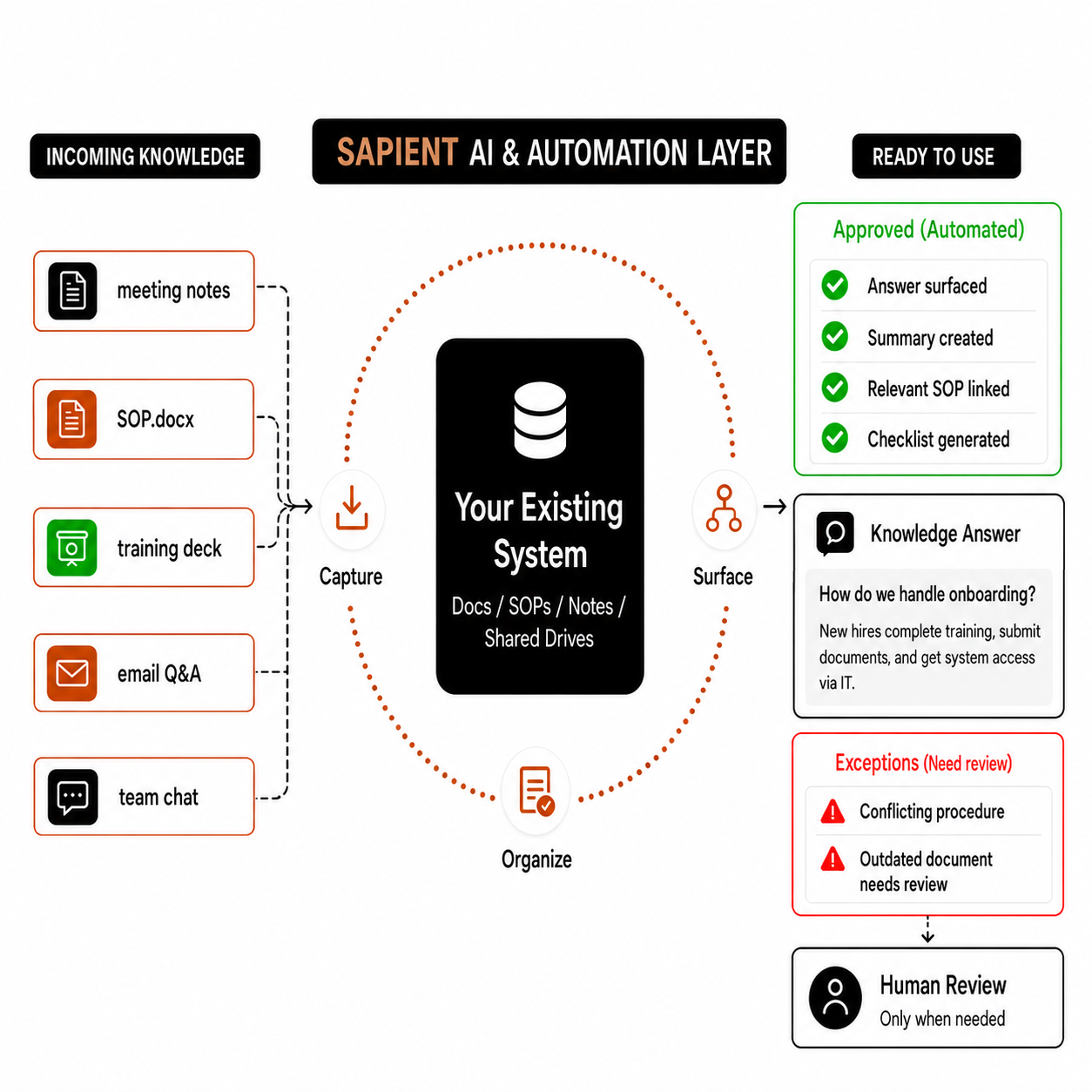
Concept Overview
Turn notes, SOPs, chats, and training content into usable operational knowledge.

Practical examples of how Sapient turns meetings, SOPs, recurring questions, and team experience into searchable internal resources that are easier to reuse.
Turn notes, SOPs, chats, and training content into usable operational knowledge.
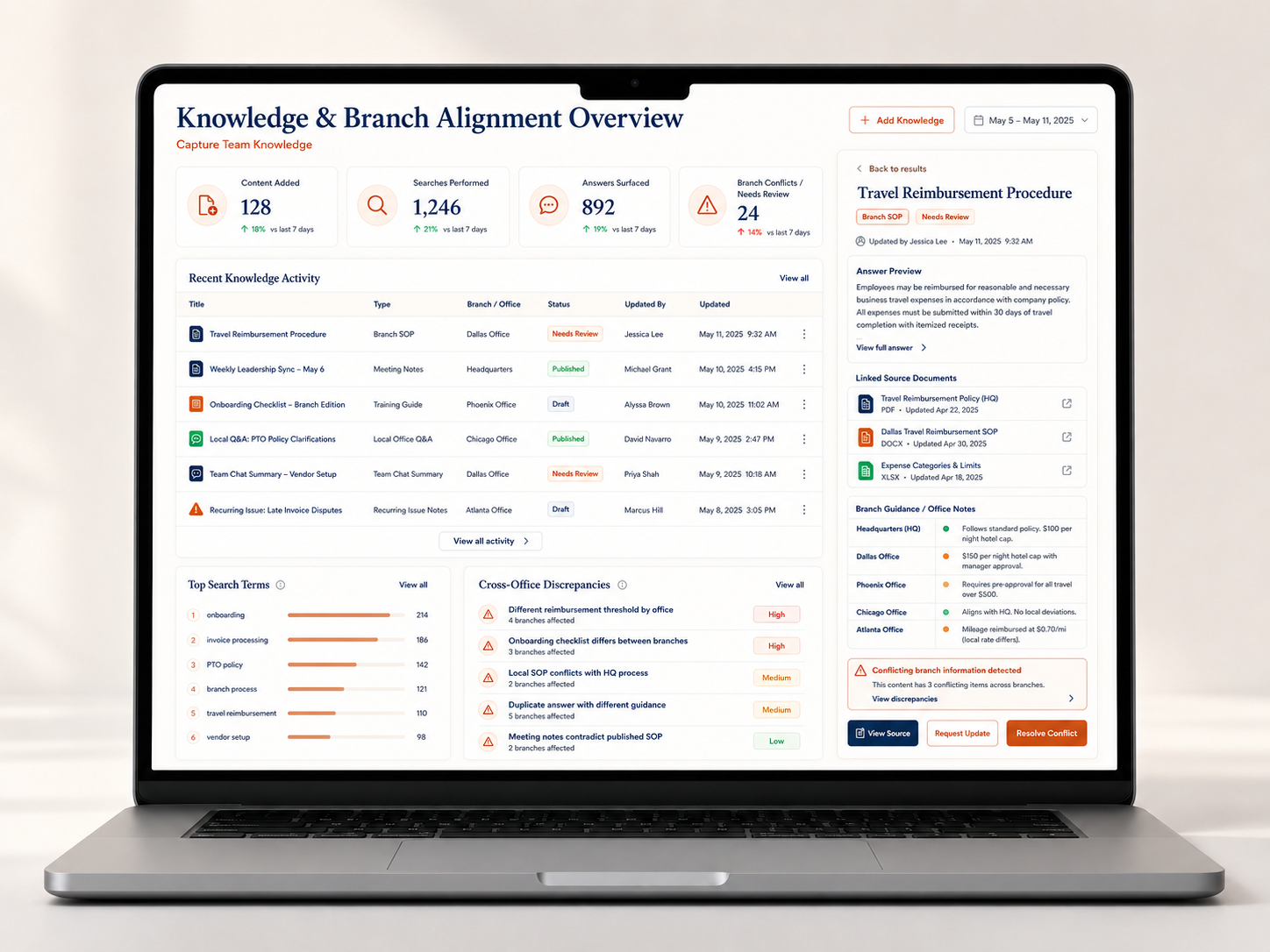
Track what knowledge was added, searched, surfaced, and flagged for branch review.
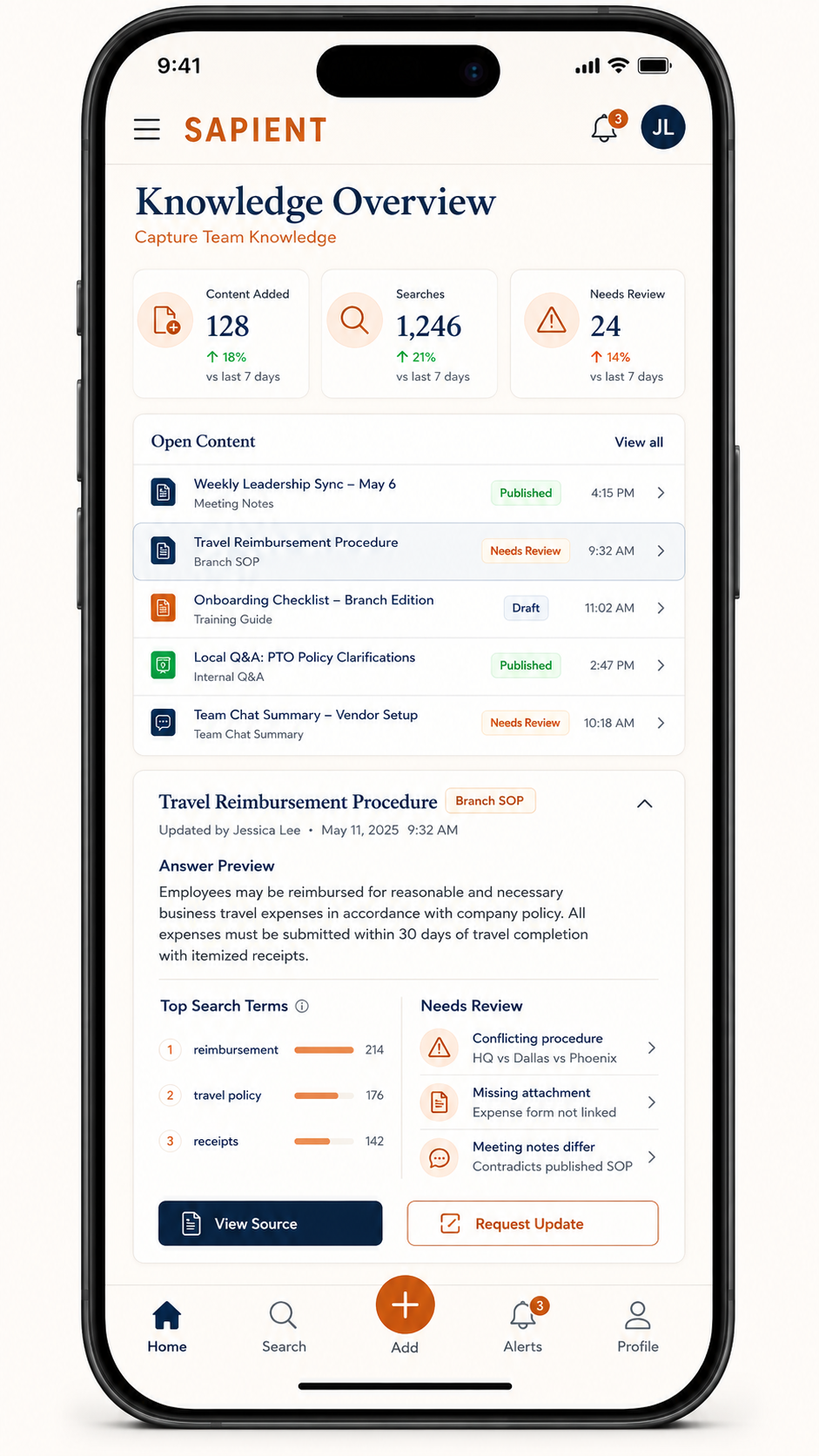
Help teams find answers, source documents, and conflicts from the field.
Example Workflow
Important discussion, decisions, and action items are often buried in long notes or follow-up emails.
A structured capture workflow turns conversations into clear outcomes, improves accountability, and builds a knowledge base that teams can search and reuse.
Collect meeting notes, recordings, chats, and supporting documents.
Identify key decisions, action items, owners, dates, and dependencies.
Use AI-assisted analysis to create a clear, structured summary.
Review for accuracy, add context or links, and publish to the team knowledge base.
Make content searchable so teams can quickly find and reuse when needed.
This knowledge-capture pattern can be adapted to meetings, SOPs, FAQs, training, and other team knowledge that should be easy to find and reuse.
Sample Stack Used - Representative tools and architecture we may use when requirements go beyond lightweight automation or simple service rules.






Start With What You Know Today
Sapient can help identify where your team's knowledge can be captured, organized, and made easier to find.