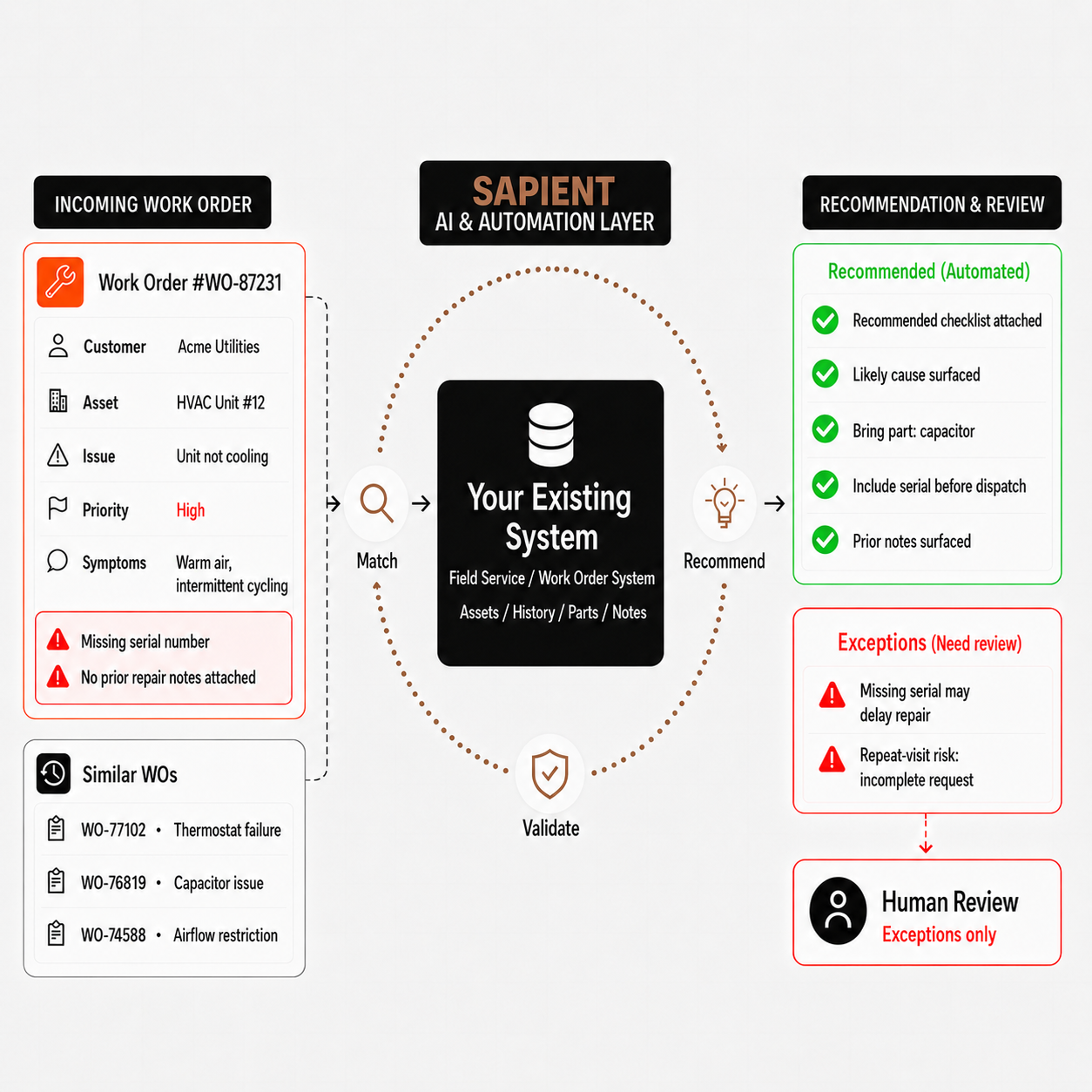
Concept Overview
Use similar work orders, history, and missing information to suggest the next best action.

Sapient uses practical AI, historical patterns, and business rules to identify risks, surface relevant context, and recommend reviewable next steps.
Use similar work orders, history, and missing information to suggest the next best action.
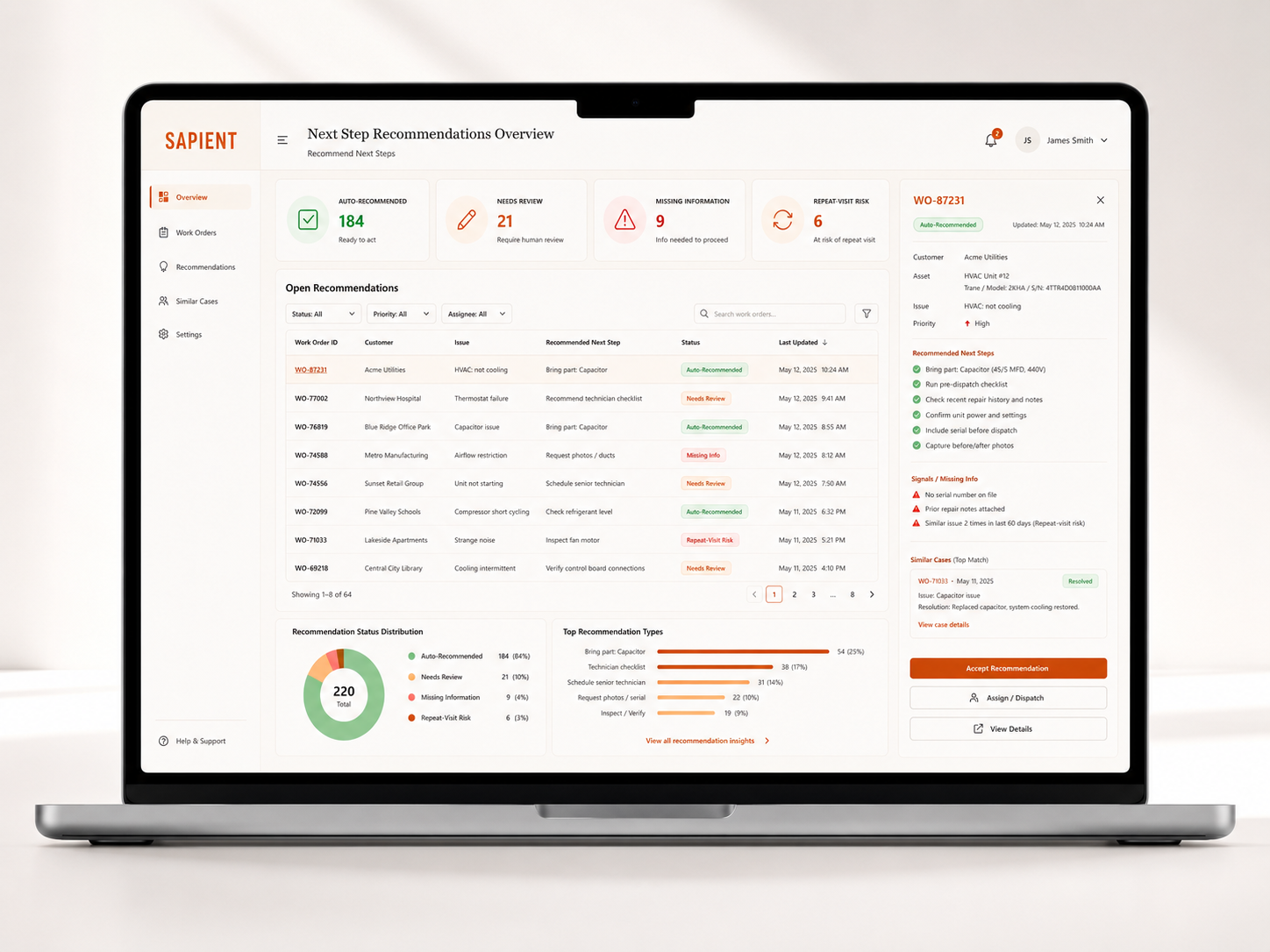
Surface recommended actions, repeat-visit risks, and missing details in a reviewable queue.
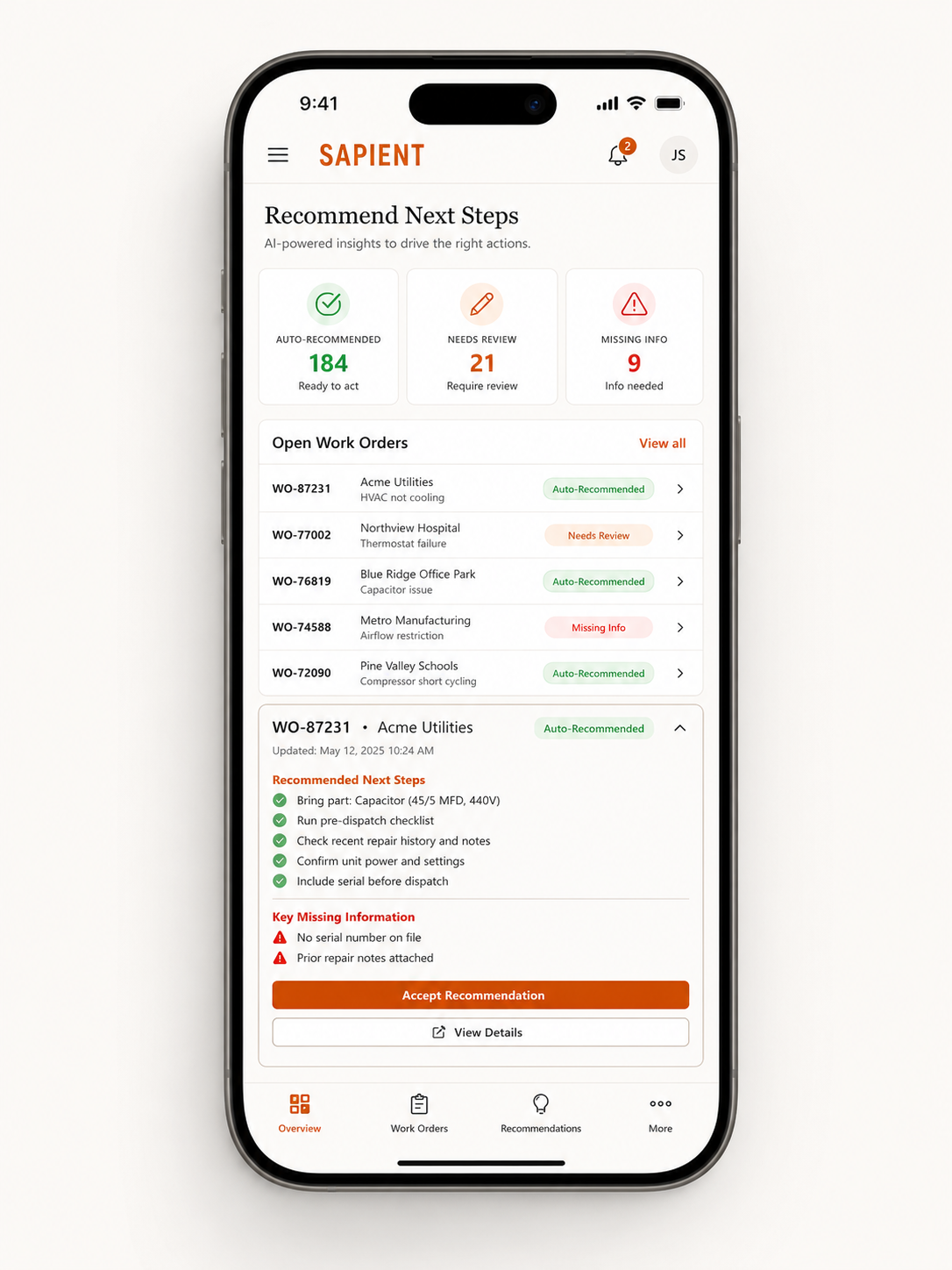
Give teams a clear mobile path to accept, assign, or investigate recommended next steps.
Example Workflow
Teams often rely on memory or scattered notes to decide what to do next on field service and operational cases.
A structured recommendation workflow helps teams move faster, reuse prior knowledge, and keep AI-assisted suggestions visible to the user instead of hidden in a black box.
Gather current case details, notes, asset history, and prior related activity.
Identify comparable records, outcomes, and known patterns.
Use AI-assisted analysis to surface risks, missing information, and likely next actions.
Present suggested next steps with supporting context so the user can review them.
The user accepts, adjusts, or rejects the recommendation, and the result is recorded for future use.
This recommendation pattern can be adapted to service operations, intake review, case triage, and other decision-support workflows.
Sample Stack Used - Representative tools and architecture we may use when requirements go beyond lightweight automation or simple service rules.






Start With The Right Workflow
Sapient can help identify where AI-assisted recommendations, missing-information checks, and decision support can improve your current process.